

When building an organisational strategy, certain elements are universally recognised as essential:
So why not apply the same principles when developing a learning strategy? And why is a learning strategy so important in the first place?
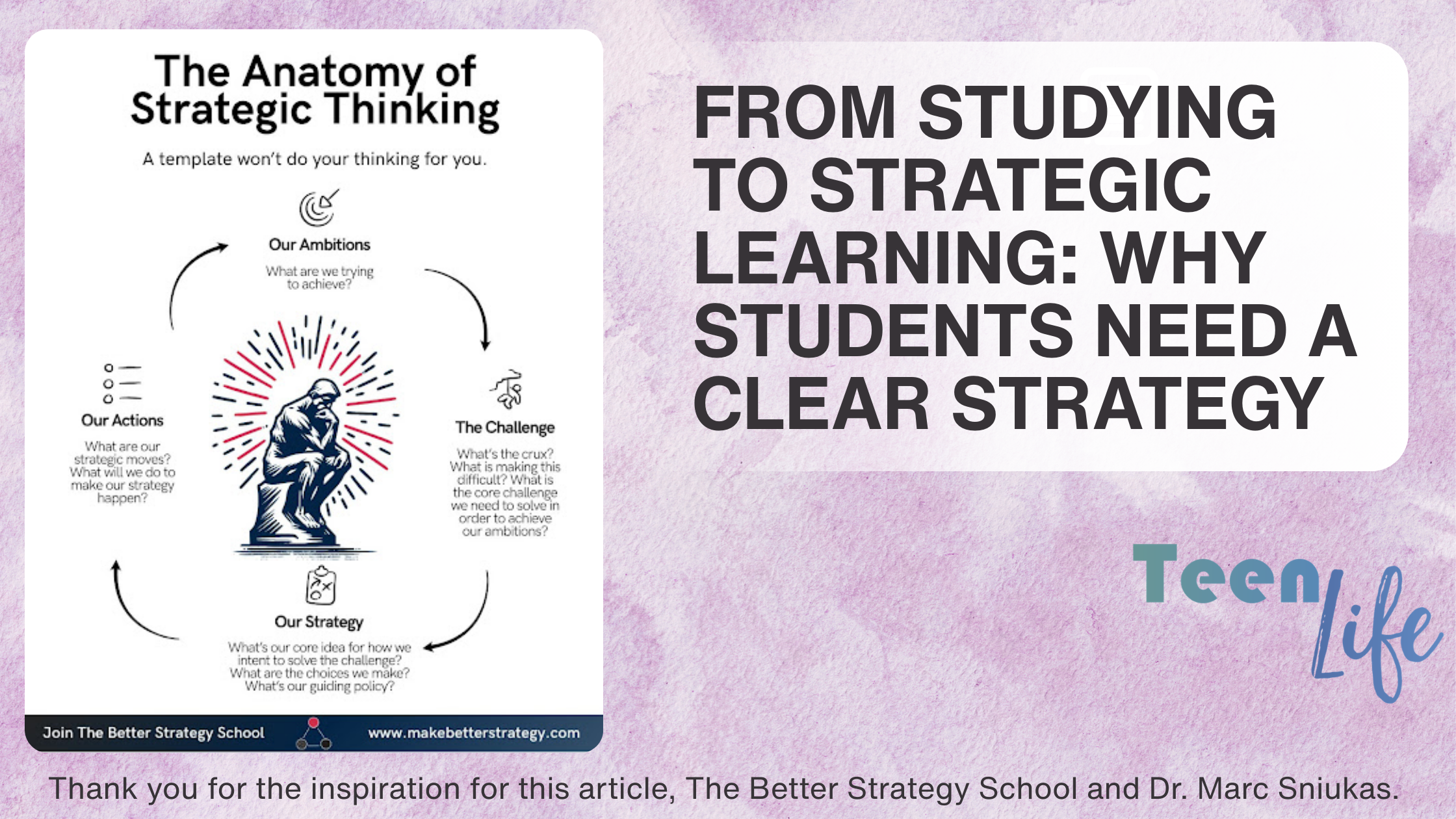
From Strategy to Learning: Applying Dr. Sniukas’ Framework
Using Dr. Sniukas’ model, we can frame a learning strategy—whether for learners or students—in a way that feels both natural and actionable.
1. Ambition
The learner must be clear about what they want to achieve and why. If motivation comes only from parents, teachers, or external pressure, learning becomes a punishment—not a purpose. True ambition is about striving for “heaven,” not just avoiding “hell.”
2. Challenges Learners may face barriers such as:
- Difficult content
- Peer pressure
- Overwhelming schedules
- High workloads
3. Our Strategy
3.1. How do we want to solve the challenges and the choices we make
Every learning journey involves decisions—about habits, tools, timing, and prioritisation. Models like the GROW model can help clarify goals, realities, options, and next steps. (Find herewith a link to the model and an explanation https://younginsperation.blogspot.com/2025/11/grow-model.html) For example, if time management is an obstacle, choices might include better planning, limiting screen time, or setting clear study windows.
3.2.Guiding Policy
This is the operating system behind the learning strategy.
For instance:
These guiding policies become the action steps that shape behaviour.
4. A Strategy Means Nothing Without Action
Planning is essential—but without action, nothing changes. Learners need to take ownership and understand the consequences of not engaging with their education intentionally. This doesn’t mean eliminating fun or creating robots. A learning strategy lightens the load, builds confidence, and—even more importantly—develops critical thinking, strategic thinking, and personal responsibility.
Strategy vs. Methods: What’s the Difference?
Study methods are tools. Study strategy is the system that determines when and how to use those tools.
By integrating Kolb’s learning styles into a broader learning strategy, students gain clarity on:
Contact me at jo@teenlife.co.za to assist in crafting a learning strategy for you or your loved one.